Section under construction. This writing is a placeholder and will be replaced.
From the studio
Harvesting stone, miles up a riverbed
Where the material comes from, and why it is worth the walk.
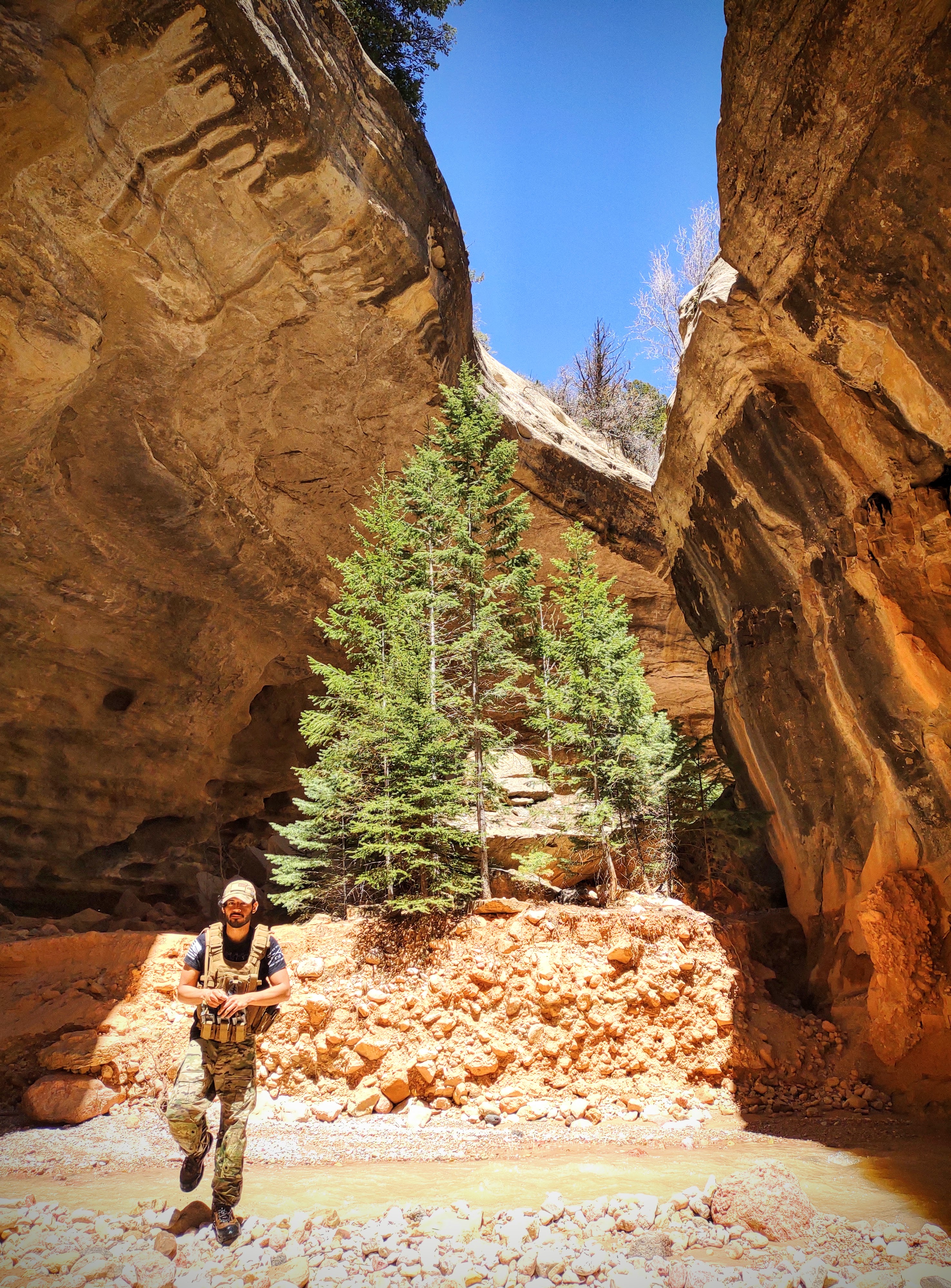
The stone does not arrive on a pallet. It is found, and then it is carried.
Most of what I work comes out of the mountains here in Utah — honeycomb calcite, alabaster, marble — and the good material is rarely near a road. It means following a riverbed for miles, reading the bank, and then getting a block that weighs more than it has any right to back out the way you came.
I walk in wearing my combat loadout. That is not for the photograph. Carrying weight over distance is the part of soldiering that stayed with me, and the walk is where the work starts — long before a chisel touches anything.
It is also deliberate. Carrying the weight in the open is a way of saying something about soldier suicide without making a speech of it.